Laminated Non-Woven Bags
How lamination actually works
The image is never printed on the fabric. A roll of BOPP film is printed in full colour on a web press, then bonded to the non-woven sheet under heat and pressure. Only after lamination is the material cut and made into bags. This is why the print quality matches coated paper rather than textile, why colour is consistent across a long run, and why the surface is water-resistant without any additional coating.
Glossy or matte
When lamination is the right choice — and when it is not
Choose it for photographic artwork
Gradients, images and complex full-colour designs reproduce properly. Nothing else does this on non-woven.
Choose it for retail packaging
Where the bag is part of the product presentation and is expected to be carried through a shopping centre.
Choose it for water resistance
The film surface sheds rain far better than raw fabric, which matters for outdoor retail and wet climates.
Skip it for simple logos
A two-colour screen print on good fabric costs less and often looks more considered than a full-colour job.
Skip it below the tooling floor
Cylinder tooling is a fixed cost. Below a certain quantity it dominates the unit price and another method makes more sense.
Skip it where softness matters
Lamination stiffens the fabric. If you want a soft, textile hand-feel, this is the wrong construction.
Specification range
Cost structure you should understand
Offset lamination carries the highest tooling cost of the print methods used on bags, because printing cylinders have to be engraved for your artwork. That cost is one-time and independent of quantity, so it dominates a small order and disappears on a large one. Cylinders are retained for repeat runs on the same design, which is why brands running an annual retail programme find the second order much better value than the first. Everything else — number of colours, coverage area, printing both faces — adds very little, because the film web is printed in one continuous pass regardless.
Artwork requirements
Vector artwork with fonts outlined, or high-resolution raster at final print size. We issue a dieline showing the flat layout with fold and gusset positions so artwork can be placed correctly across panels. Because the image is printed on white film rather than on fabric, colour behaves close to a coated-paper reference — Pantone matching in this construction is materially more accurate than on raw non-woven.
Printing methods compared
Where lamination beats screen printing, and where it does not.
GSM guide
Why laminated bags start at a heavier base fabric.
Order process
Artwork approval, tooling and production stages.
Request a quote
Send artwork and quantity for a costed specification.
Frequently asked questions
Is a laminated bag waterproof?
Water-resistant rather than waterproof. The BOPP film sheds rain and resists surface moisture well, but seams and stitch holes are not sealed, so it is not a wet-goods container.
Does lamination make the bag recyclable or not?
The laminated construction combines PP fabric with a BOPP film layer, which makes material separation harder than for unlaminated fabric. We would not describe it as readily recyclable, and we would advise against printing a recycling claim on it without checking your local rules.
Can I print different artwork on the front and back?
Yes, and it costs very little extra. The film is printed as a continuous web before the bag is assembled, so the two faces are simply two areas of the same print run.
What is the tooling cost?
It depends on the artwork size and the number of cylinders required, and it is itemised as a separate line in your quotation rather than buried in the unit price. Cylinders are retained for repeat orders on the same design.
Glossy or matte — which should I choose?
Glossy for maximum colour impact and general retail; matte where the brand register is premium, minimal or fashion-led. If the decision is close, ask for both as samples — the difference is much clearer in the hand than on screen.
How accurate is Pantone matching on a laminated bag?
Close. Because the ink sits on white BOPP film rather than on absorbent fabric, colour behaves much more like coated paper than like a screen print on raw non-woven.
Further reading
Laminated vs unlaminated non-woven bags — what BOPP film adds, what it costs, and when to leave it off.
How non-woven bags are made — from PP pellet to packed carton, including every QC gate.
Bag size and gusset — how to write width, height and gusset so the bag fits the product.
Send your artwork and the quantity range you are working to. We will come back with tooling cost, unit price at your quantity breaks and a sampling plan.
Showing all 13 results
-
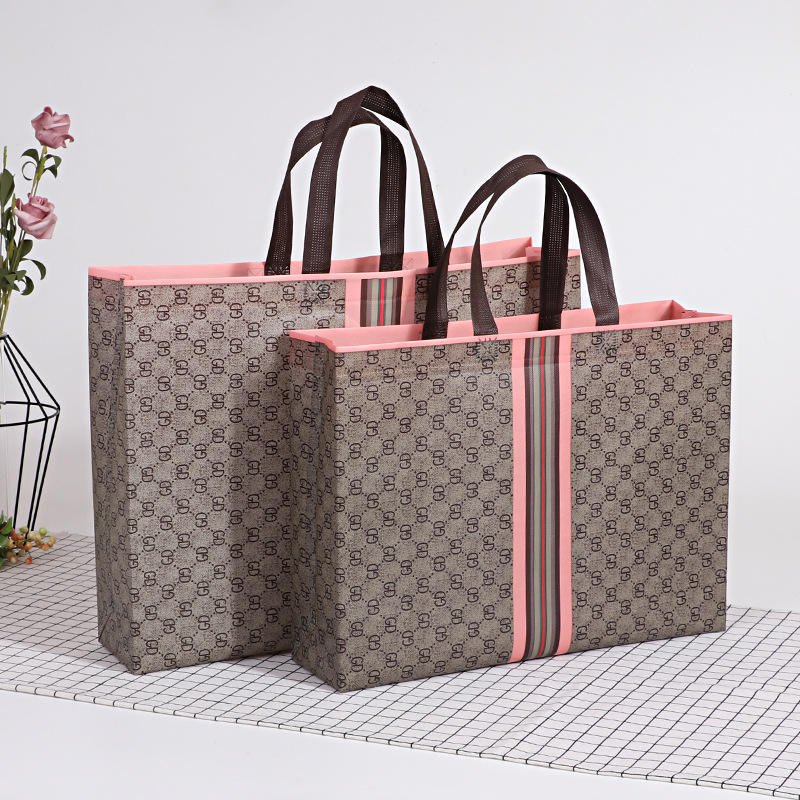
Curved-Corner Laminated Non-Woven Tote
-

Custom Laminated Non-Woven Shopping Bag
-
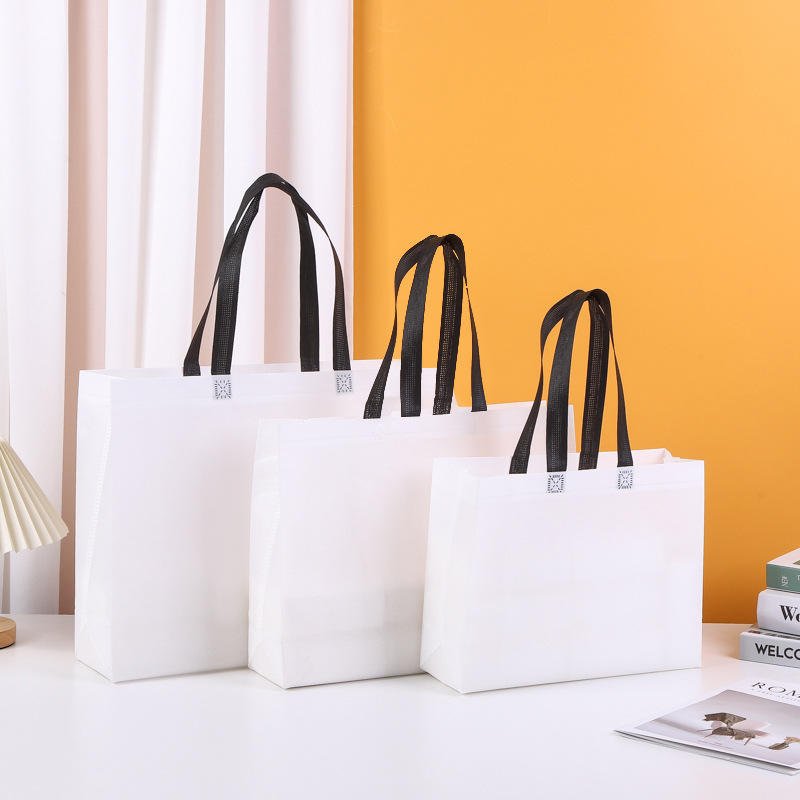
Foldable Non-Woven Laminated Tote Bag – Custom-Print Reusable OEM
-
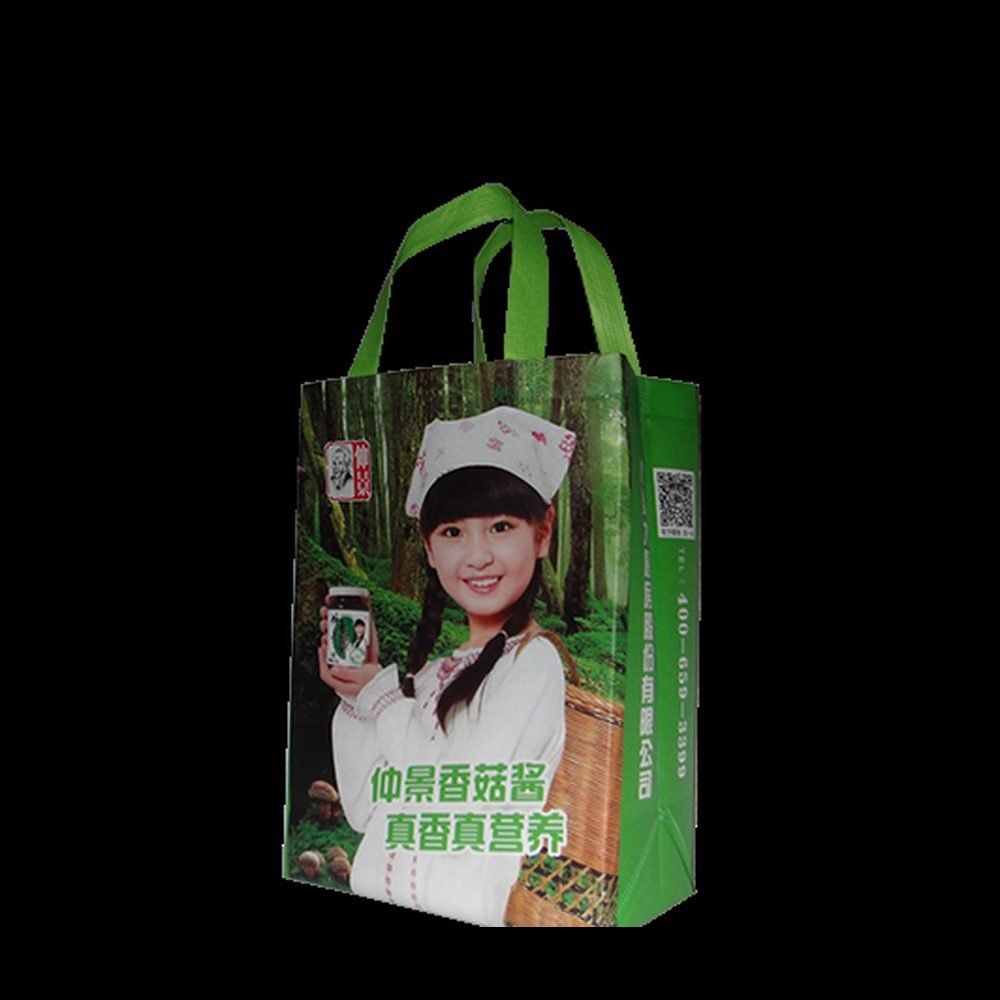
Full-Color Laminated Non-Woven Bag – Custom Photo-Print Promotional Tote
-
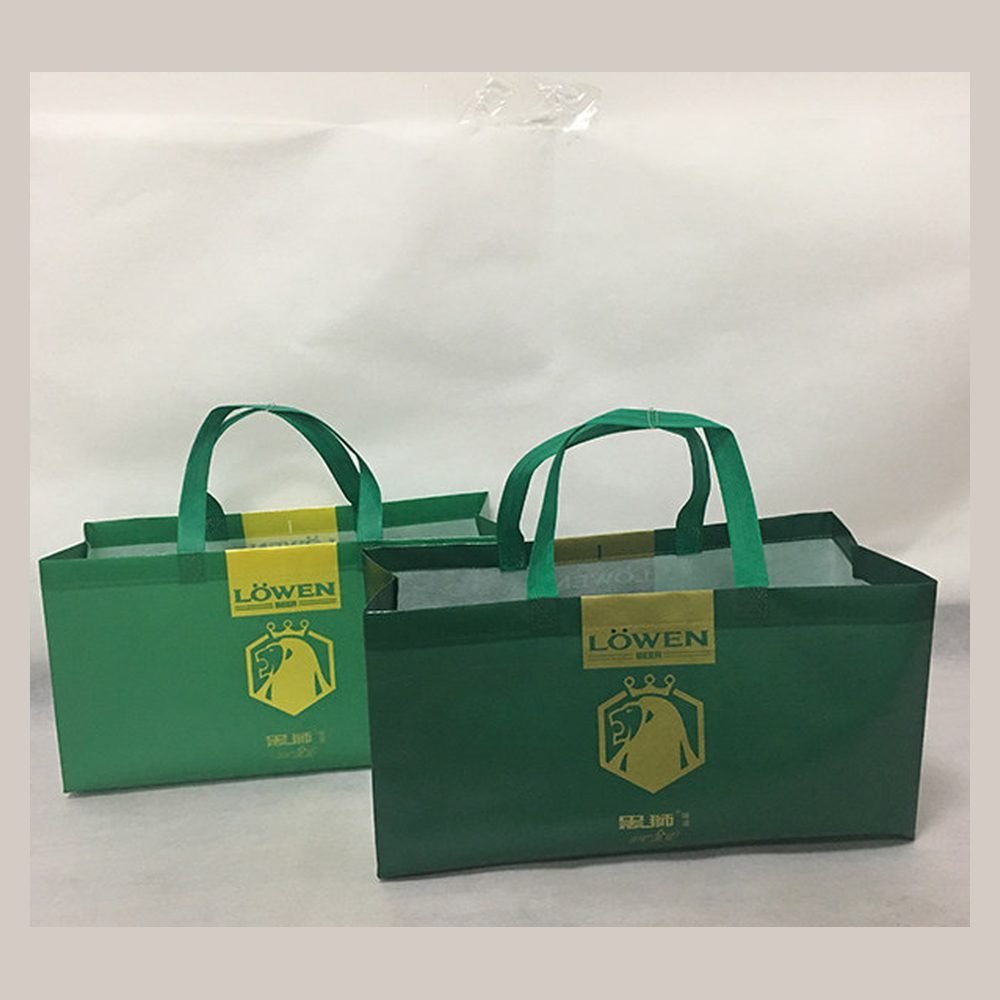
Laminated Non-Woven Box Bag – Heavy-Duty Custom-Print Grocery Tote
-
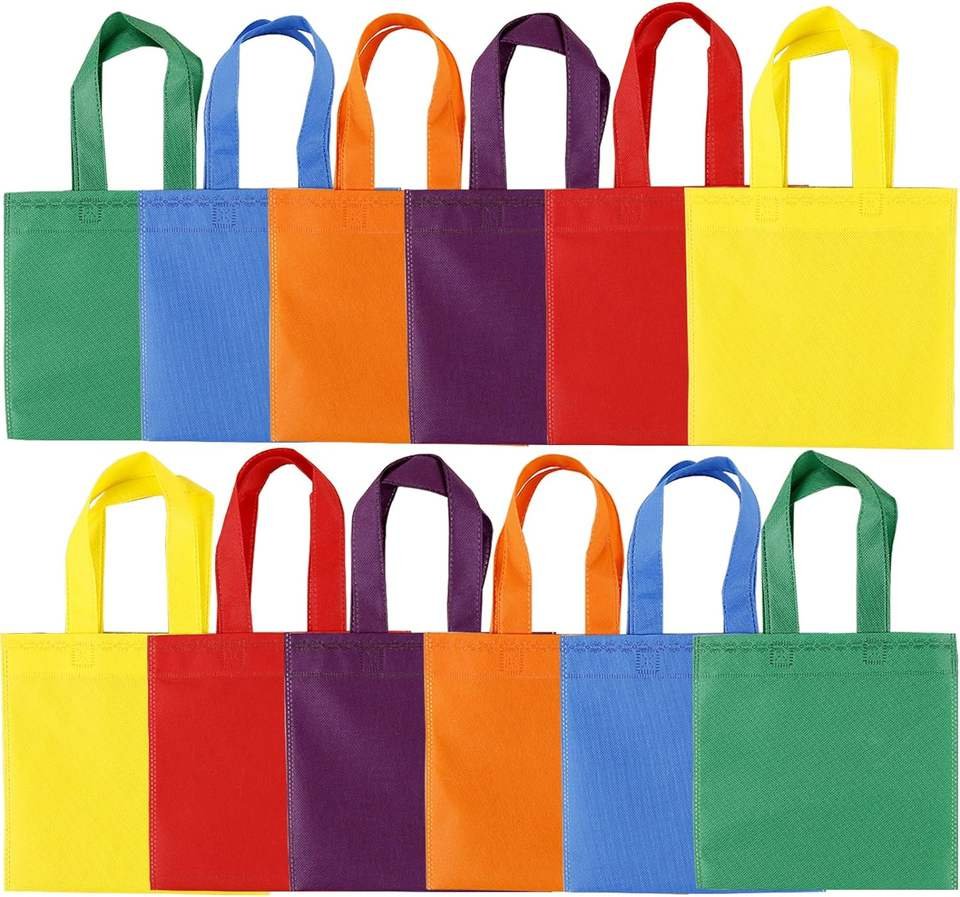
Laminated Non-Woven Shopping Bag
-

Laminated Non-Woven Supermarket Tote
-
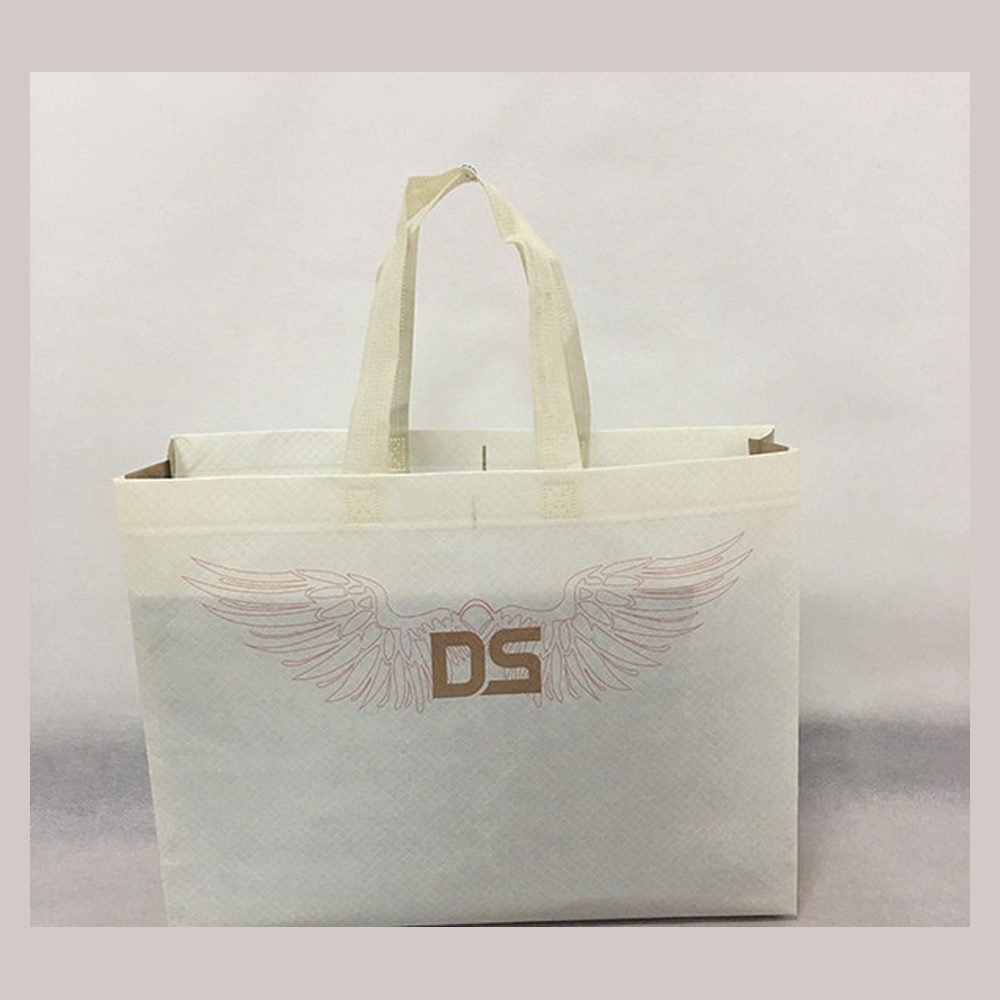
Laminated Non-Woven Tote Bag – Glossy Custom-Print Shopping Bag (Bulk)
-
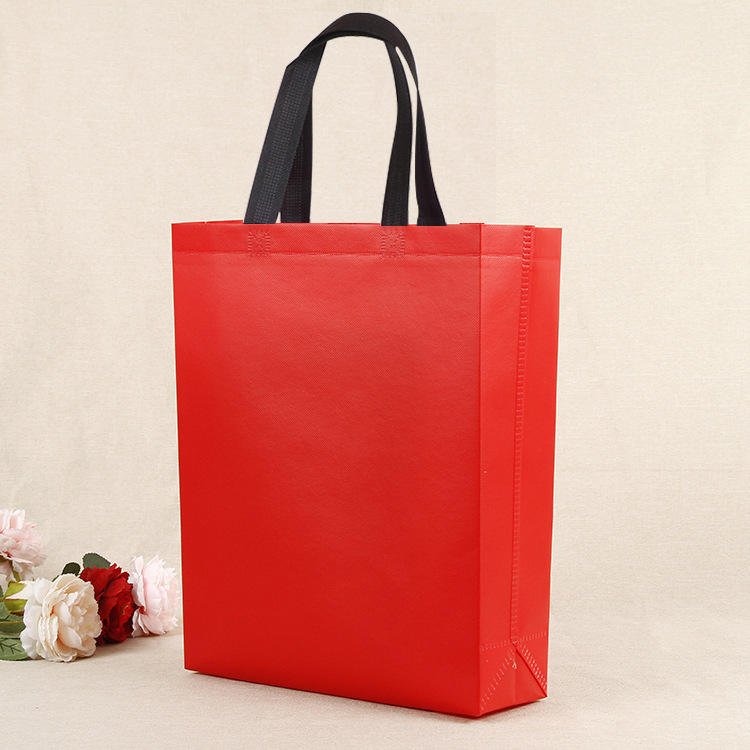
Non-Woven Laminated Tote Bag – Custom-Print Reusable OEM
-
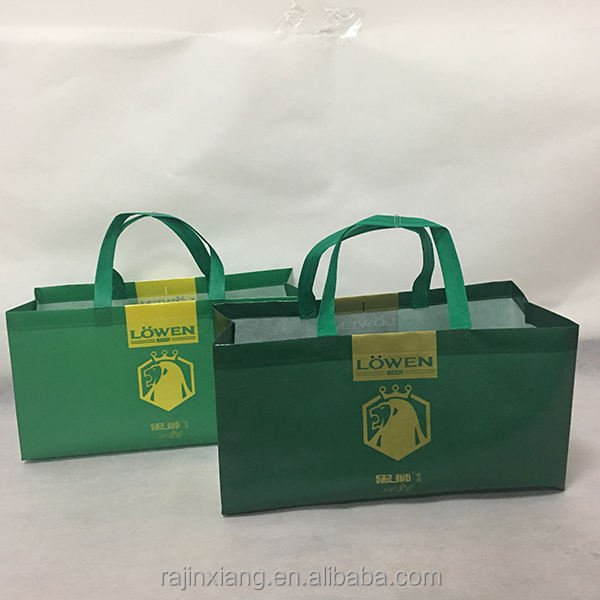
Non-Woven Laminated Tote Bag – Custom-Print Reusable OEM
-
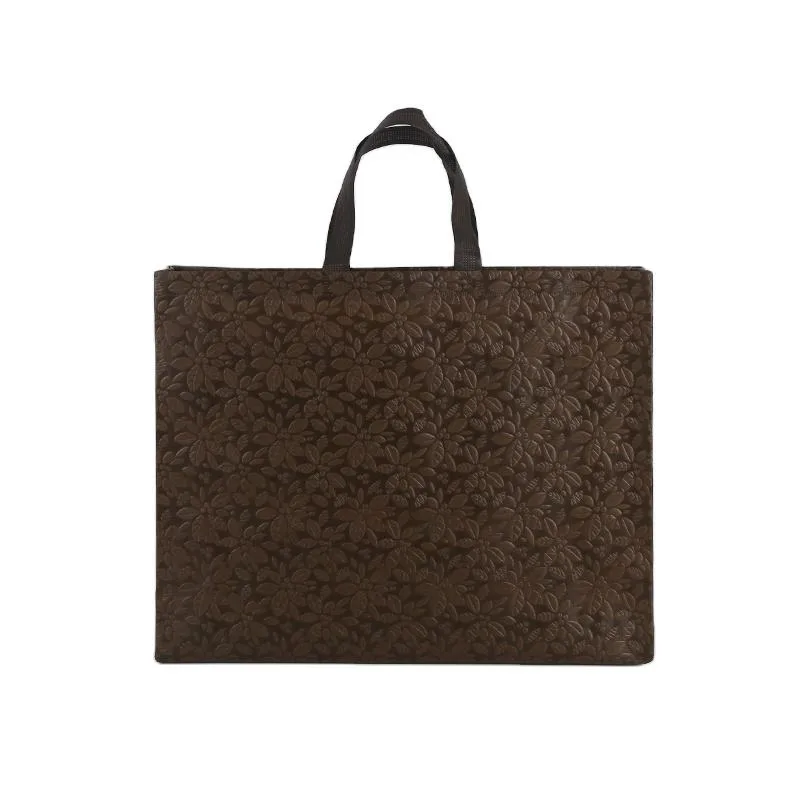
Patterned PP Laminated Tote with Carry Handles
-

PP-Laminated Non-Woven Carry Bag
-
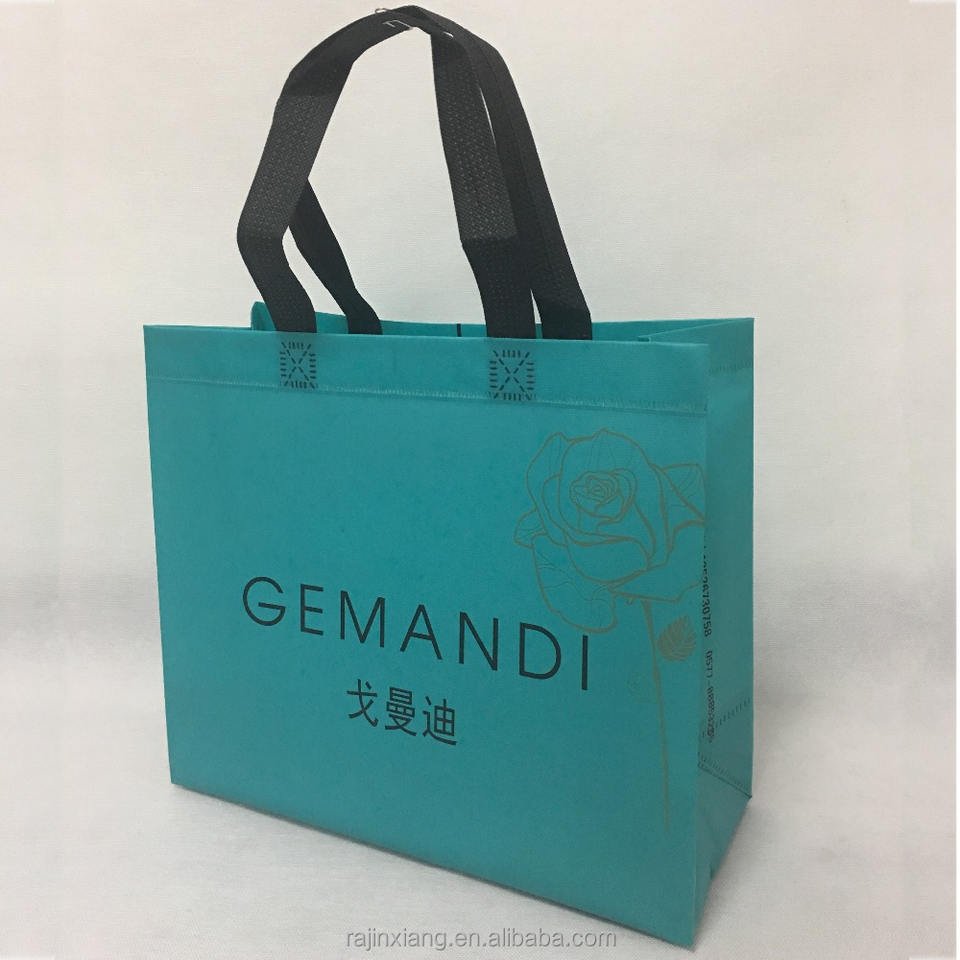
PP-Laminated Shoulder Tote with Screen Print
How to Specify Custom Laminated Non-Woven Bags
Laminated non-woven bags combine a polypropylene fabric base with a printed film layer, making them suitable for detailed graphics, retail promotions and reusable shopping programmes. Define the finished size, fabric GSM, film finish, handle style, seam construction, artwork coverage, expected load and packing requirements when comparing suppliers.
Printing, Film and Construction
Gravure-printed film supports photographic colour and broad coverage, while matte or gloss finishes change appearance and scuff visibility. Lamination adds stiffness and surface protection but does not replace correct handle reinforcement or seam design. Artwork must allow for folds, gussets, seals and registration tolerance.
Sample Approval Checklist
- Check colour and finish under suitable lighting
- Confirm folds and gussets do not interrupt key artwork
- Test handles and seams at the intended load
- Approve finished dimensions and carton packing
Review the custom laminated shopping bag and full-colour laminated bag, then request a production quote.
Frequently Asked Questions
- Does fabric GSM determine bag strength?
- GSM matters, but handles, seams, reinforcement, gussets and the complete loaded construction must be evaluated together.
- Which details make quotations comparable?
- Use one brief covering finished dimensions, GSM, colour, construction, handles or closure, artwork, load, quantity and packing.
- Why is a production-equivalent sample important?
- It establishes the approved material, dimensions, colour, artwork and loaded performance before bulk production.