Shopping Bags
What sits in this category
A shopping bag has one job in the store and a second job on the street. In the store it has to survive being loaded, carried to the car and reopened at home. On the street it is a moving advertisement, and how it photographs matters as much as how much it holds. Those two jobs pull in different directions: the paper stock that prints beautifully is rarely the one that carries eight kilograms, and the fabric that carries eight kilograms rarely prints like a magazine cover. Most of the specification work below is about deciding which job matters more for your particular store.
Who buys these
Boutique & fashion
Laminated art-paper carriers with rope handles and reinforced bases, where the bag is part of the in-store experience and is expected to be reused as a gift bag.
Supermarket & grocery
Kraft paper and reusable woven or non-woven carriers bought in volume, where cost per unit and load capacity outrank finish.
Food & takeaway
Flat-handle and SOS kraft bags, window bags and greaseproof-lined formats for bakeries, cafes and restaurants.
E-commerce & gifting
Printed paper bags used as in-box gifting elements or as the outer carrier for click-and-collect orders.
Materials compared
The four stocks below cover almost every retail brief. The right one is usually obvious once you know the weight of the heaviest item the bag has to carry and whether the bag will ever see rain.
Weight alone will not tell you whether a bag holds. Paper grammage describes the sheet, not the construction: a 170 gsm bag with a single-ply base and glued-in handles can fail before a 120 gsm bag with a double-turned base and a reinforced handle patch. Ask about base construction as well as stock weight.
Handles, base and reinforcement
Printing and finishing
Retail bags are where finishing budget actually shows. These are the options that change how the bag reads in the hand.
Method selection, artwork requirements and how each choice affects tooling are worked through in the bag printing guide.
What actually drives your unit price
Stock weight and size
Paper is bought by the tonne. A larger bag in a heavier stock moves the material cost before anything is printed on it.
Number of colours
Each spot colour is a plate or a screen. Consolidating a five-colour logo to two changes the economics of a small run more than any negotiation will.
Finishing stack
Lamination, foil and spot UV are separate passes. Each adds a handling step and a scrap allowance.
Handle and base spec
Rope handles are fitted by hand on most formats. A board base is an extra component and an extra operation.
Quantity break
Setup is a fixed cost spread across the run, so unit price steps down at defined quantities. Your quotation shows where those steps fall.
What to include in your enquiry
The more of this you can give us, the faster the quotation and the fewer rounds it takes to get right.
How orders are produced and checked
Retail bag production is coordinated through an SGS-verified facility in Wenzhou and its audited print partners. Incoming stock is checked for grammage and shade before the run starts; print registration, colour against the approved proof, handle pull and base load are checked at defined intervals during production; and a pre-shipment inspection follows ISO 2859-1 AQL sampling before the shipment is released.
The five-stage order process
Enquiry, quote, artwork approval, production, inspection and shipping.
Quality & compliance
Every checkpoint, the method used and the AQL settings.
Non-woven vs canvas vs paper
An honest comparison of cost, durability and freight.
Request a quote
Four questions to get a specification-based price.
Frequently asked questions
What is the minimum order quantity?
It depends on the stock, the print method and the finishing rather than a single site-wide number. A flexo-printed kraft bag and a laminated art-paper bag with foil have very different setup costs and therefore very different minimums. Yours is stated in your quotation, along with the quantity breaks where unit price steps down.
How much weight will a paper bag carry?
It depends far more on base and handle construction than on paper weight. A reinforced double-turned base with rope handles knotted through eyelets carries considerably more than a glued flat-handle bag in the same stock. Tell us the heaviest item and we will specify to it rather than quoting a headline figure.
Are your paper bags suitable for food?
Unlined kraft without interior printing is commonly used for dry and packaged food. For direct contact with unpackaged or greasy food the material grade and any liner must be confirmed for your market, and we set that out in writing in the quotation rather than assuming it.
Can you match a bag I already buy?
Usually. Send photographs of the bag flat and from the side, the measured dimensions, and if possible the bag itself. We will quote against the specification we measure and flag anything we would change.
Which finishes can be combined?
Matte lamination with foil stamping and spot UV is the most common premium combination. Foil and spot UV both need a laminated surface to sit on cleanly, so unlaminated kraft is generally limited to flat printing and embossing.
How long does production take?
Lead time is driven by quantity, print and finishing method, the number of sampling rounds and the season. We state it in the quotation and confirm it again on the order confirmation, measured from artwork and specification approval.
Tell us what the bag has to carry, how many you need and where it ships. We will come back with a specification and a price.
Showing all 3 results
-
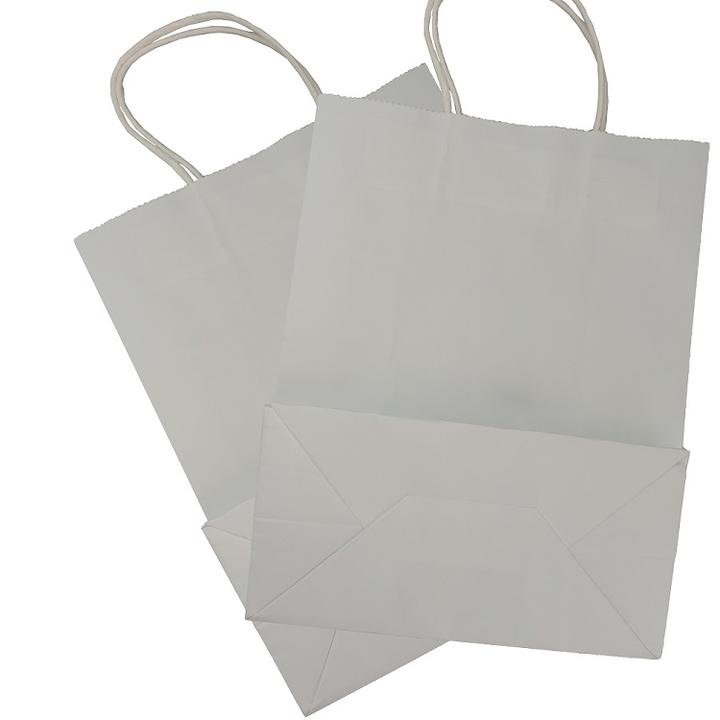
Kraft Paper Shopping Bag with Twisted Handle
-

Luxury Art Paper Bag with Ribbon Handle
-
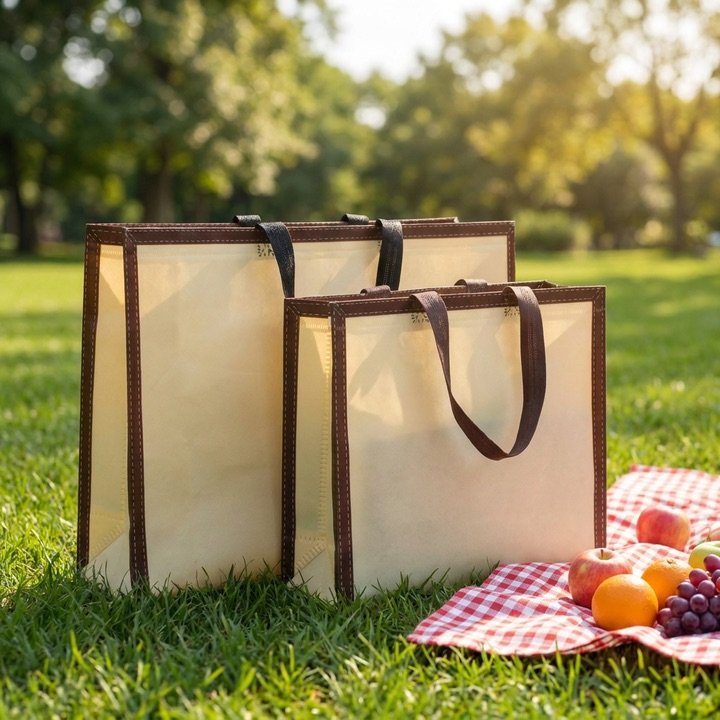
RPET Reusable Shopping Bag
Custom Shopping Bags for Retail Brands and Promotions
Custom shopping bags are specified around the products they carry, the brand presentation and the required reuse level. A sourcing brief should include finished dimensions, gussets, material, weight or thickness, handles, reinforcement, print coverage, order quantity, packing and destination.
Compare Material Options
Non-woven polypropylene is economical for reusable promotions and grocery programmes. Canvas provides a natural, durable premium feel. Kraft paper suits practical retail and takeaway packaging, while coated art paper supports luxury printing and finishes. The best option depends on load, artwork, unit budget and disposal or reuse expectations.
Information for Comparable Quotes
- Use case and maximum intended load
- Width, height and gusset depth
- Material, colour and target weight
- Handle style and print requirements
- Quantity, delivery country and deadline
Browse non-woven bags, canvas bags and paper shopping bags, or request a specification-based quote.
Frequently Asked Questions
- Which material is best for a custom shopping bag?
- The choice depends on load, reuse, print, presentation, budget and disposal needs; compare non-woven, canvas, kraft and coated paper against one brief.
- How can buyers receive comparable quotations?
- Give every supplier the same dimensions, material, handles, construction, artwork, quantity, packing, destination and approval standard.
- Is a pre-production sample recommended?
- Yes. It establishes the approved material, dimensions, construction, colour, artwork and carrying performance before bulk production.